

Breaking Barriers: How the Convention on the Elimination of All Forms of Discrimination against Women Advances Gender Equality

This article explores the Convention on the Elimination of All Forms of Discrimination against Women (CEDAW), a key UN treaty promoting gender equality since 1979. It examines CEDAW’s legal framework, provisions, and impact on national policies, while addressing challenges in implementation across diverse legal systems.
Anguilla’s Treaty-Making Process: Navigating Constitutional Framework and International Obligations
This article explores Anguilla’s treaty-making process as a British Overseas Territory, highlighting its limited autonomy under the 1982 Constitution Order. It examines the dualist approach to treaty incorporation, non-party status to the Vienna Convention, and implications for international cooperation with small jurisdictions.
The Paris Agreement: Challenges in Meeting Global Climate Targets

The Paris Agreement, adopted in 2015 at COP21, unites 196 parties to limit global warming to below 2°C, ideally 1.5°C, while addressing adaptation and financial support for vulnerable nations. Despite its ambitions, challenges like inadequate NDCs, enforcement issues, and economic disparities hinder its climate goals.
Antigua and Barbuda’s Treaty-Making Process: Constitutional Framework and International Commitments
This article explores Antigua and Barbuda’s treaty-making process within its constitutional monarchy framework since gaining independence in 1981. It examines the executive-driven process, the dualist approach requiring legislative incorporation of treaties, and the country’s non-party status to the Vienna Convention on the Law of Treaties.
Safeguarding the Seas: Addressing Maritime Terrorism under the 1988 SUA Convention
Maritime terrorism threatens global security, disrupting trade and endangering lives. The 1988 SUA Convention, a key international law, establishes a framework to criminalize and prosecute such acts. This article explores its provisions, implementation challenges, and the process of integrating treaties into national law through monist or dualist systems.
Angola’s Treaty-Making Process: Balancing Constitutional Mandates and International Commitments

This article explores Angola’s treaty-making process, highlighting the balance between its constitutional framework and international obligations. Rooted in the 2010 Constitution, Angola’s approach combines monist and dualist elements, with the President and National Assembly playing key roles in negotiation and ratification, while navigating global legal integration.
Navigating Uncharted Waters: The Challenges of Implementing the Marine Biodiversity Treaty Beyond National Jurisdiction
The BBNJ Agreement, adopted on June 19, 2023, under UNCLOS, is a historic step toward conserving marine biodiversity in Areas Beyond National Jurisdiction. It addresses marine genetic resources, protected areas, environmental assessments, and capacity building. However, implementation faces legal, jurisdictional, and resource challenges requiring global cooperation.
Breaking Barriers: Ensuring Equal Access to Education under the Convention on the Rights of Persons with Disabilities

This article examines the Convention on the Rights of Persons with Disabilities (CRPD), focusing on Article 24, which mandates inclusive education for persons with disabilities. It explores legal frameworks for treaty implementation, the CRPD’s relationship with the Vienna Convention on the Law of Treaties, and challenges in ensuring equal educational access.
Empowering Inclusion: How the Convention on the Rights of Persons with Disabilities Promotes Accessibility in Public Spaces

The Convention on the Rights of Persons with Disabilities (CRPD) champions accessibility in public spaces as a fundamental right, promoting inclusion through legal provisions like Article 9. It mandates equal access to environments, transportation, and information, urging states to adopt universal design and transform national laws for tangible societal change.
Andorra’s Treaty-Making Process: Constitutional Foundations and International Commitments
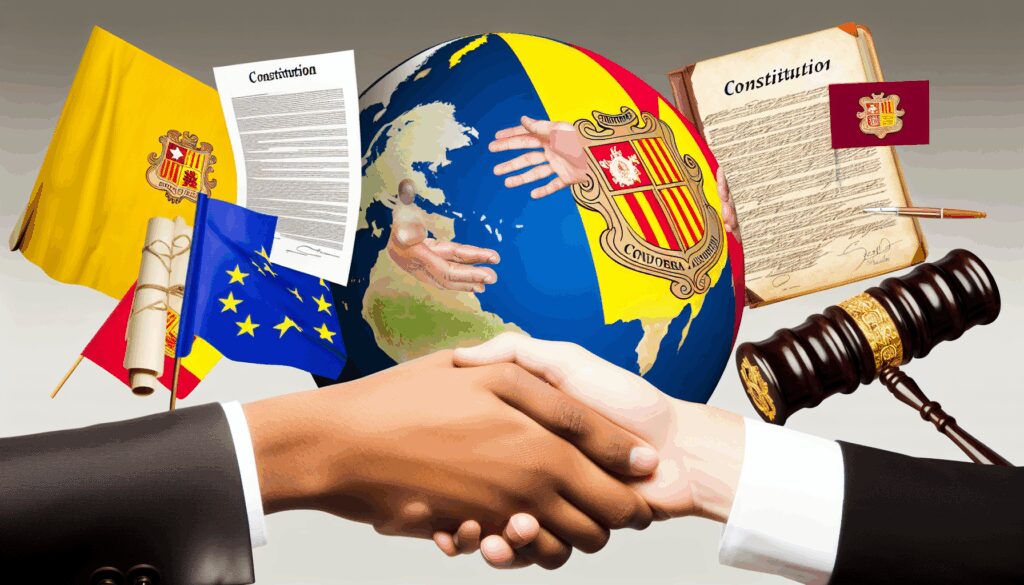
This article explores Andorra’s treaty-making process, rooted in its 1993 Constitution. It highlights Andorra’s monist approach to incorporating international law, the roles of its government and legislature in treaty ratification, and its non-party status to the Vienna Convention on the Law of Treaties (1969).

