

The Paris Agreement: Challenges in Meeting Global Climate Targets

Climate change poses a critical global challenge, addressed by the Paris Agreement of 2015, which aims to limit temperature rises to below 2°C. Despite near-universal adoption, the Agreement struggles with non-binding commitments, implementation gaps, political instability, and economic trade-offs, hindering its ambitious climate goals.
Ensuring Accessibility: Implementing the Convention on the Rights of Persons with Disabilities in Public Spaces

This article explores the implementation of the Convention on the Rights of Persons with Disabilities (CRPD) in public spaces, emphasizing accessibility obligations and legal frameworks for treaty incorporation. It analyzes monist and dualist approaches using a hypothetical country and examines the CRPD’s relationship with the Vienna Convention on the Law of Treaties.
Empowering Inclusion: How the Convention on the Rights of Persons with Disabilities Advances Accessibility in Public Spaces

The Convention on the Rights of Persons with Disabilities (CRPD), adopted in 2006, is a pivotal human rights treaty ensuring equal rights for persons with disabilities. It emphasizes accessibility in public spaces as crucial for inclusion, mandating barrier removal and inclusive design under Article 9 and related provisions.
Protecting the Future: Ensuring Child Safety Under the Convention on the Rights of the Child

The Convention on the Rights of the Child (CRC), adopted in 1989, is a pivotal international treaty ensuring child safety and rights globally. This article examines CRC implementation, legal frameworks, monist and dualist approaches, and the role of the Vienna Convention on the Law of Treaties in a hypothetical country.
Banning Landmines: The Global Impact of the Anti-Personnel Mine Ban Convention

The Anti-Personnel Mine Ban Convention (APMBC), adopted in 1997, has significantly reduced the global use and stockpiling of landmines, destroying over 55 million mines and establishing a norm against their deployment. Despite challenges from non-signatories and ongoing conflicts, it remains a cornerstone of humanitarian and disarmament efforts.
Enhancing Global Aviation Safety: The Impact of the 2014 Protocol on International Civil Aviation Convention

The 2014 Protocol to Amend the Convention on International Civil Aviation modernizes global aviation safety by updating security measures and reinforcing prohibitions on the use of force against civil aircraft. This article explores its legal implications, treaty-making processes, and impact on international cooperation and national laws.
Preserving the Past Beneath the Waves: Safeguarding Underwater Cultural Heritage Under the 2001 Convention
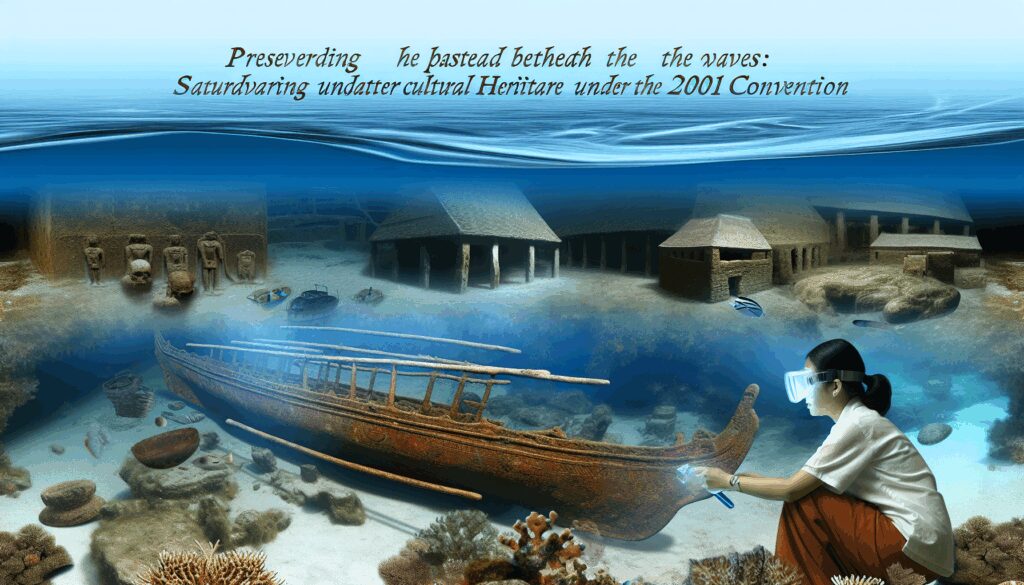
This article examines the 2001 UNESCO Convention on the Protection of Underwater Cultural Heritage, a key framework for safeguarding submerged historical artifacts like shipwrecks. It discusses legal principles, state obligations, treaty incorporation challenges, and the Convention’s relationship with the 1969 Vienna Convention on the Law of Treaties.
The Paris Agreement: Challenges in Achieving Global Climate Goals
The Paris Agreement, adopted in 2015 at COP21, aims to limit global temperature rise to below 2°C, ideally 1.5°C, through international cooperation on climate change mitigation, adaptation, and finance. Despite near-universal acceptance by 195 UNFCCC members, it faces challenges like inconsistent national commitments and weak enforcement.
Breaking Barriers: How the Convention on the Elimination of All Forms of Discrimination Against Women Advances Gender Equality

This article examines the Convention on the Elimination of All Forms of Discrimination Against Women (CEDAW), a pivotal UN treaty adopted in 1979 to eradicate gender discrimination. It explores CEDAW’s framework, key provisions, implementation challenges, and legal complexities under international law, highlighting its transformative potential for gender equality.
Combating Global Racism: The Impact of the International Convention on the Elimination of All Forms of Racial Discrimination

This article explores the International Convention on the Elimination of All Forms of Racial Discrimination (ICERD), adopted in 1965, as a key tool in combating global racism. It examines ICERD’s historical context, legal mechanisms, monist and dualist incorporation approaches, relationship with the Vienna Convention, and ongoing challenges in implementation.

