
Managing Shared Rivers: Challenges in Implementing the Convention on Non-Navigational Uses of International Watercourses

This article examines the challenges of managing shared rivers under the 1997 UN Watercourses Convention, a key framework for equitable utilization and conflict prevention. It discusses political, legal, and institutional barriers to implementation, explores monist and dualist legal systems, and highlights the Convention’s relationship with the 1969 Vienna Convention on Treaties.
Revising Global Drug Policy: The Impact of the Protocol Amending the Single Convention on Narcotic Drugs, 1961
The 1972 Protocol Amending the Single Convention on Narcotic Drugs, 1961, marked a significant evolution in global drug policy by strengthening international cooperation and the role of the International Narcotics Control Board. It balanced enforcement with humanitarian approaches, emphasizing treatment and prevention over purely punitive measures.
Enhancing Global Wildlife Protection: The Impact of Amendments to the Convention on the Conservation of Migratory Species

This article explores the impact of amendments to the Convention on the Conservation of Migratory Species (CMS) on global wildlife protection. It highlights the CMS’s adaptability to emerging challenges like climate change, the inclusion of new species, and the role of national legal systems in implementing treaty obligations.
Combating Global Crime: The Impact of the United Nations Convention against Transnational Organized Crime on Human Trafficking

This article examines the United Nations Convention against Transnational Organized Crime (UNTOC), adopted in 2000, as a pivotal framework for combating human trafficking. It explores UNTOC’s legal structure, the Trafficking Protocol’s impact on prevention and prosecution, implementation challenges, and the influence of the Vienna Convention on treaty-making processes.
Addressing Global Mercury Pollution: The Impact of the Minamata Convention

The Minamata Convention on Mercury, adopted in 2013, is a crucial global treaty aimed at reducing mercury pollution by addressing its entire life cycle, from supply to disposal. This article explores its impact, legal frameworks for treaty entry, challenges, and the role of international law in environmental governance.
Implementing Oversight: The Impact of the Optional Protocol to the Convention Against Torture on National Monitoring Mechanisms

This article explores the transformative impact of the Optional Protocol to the Convention against Torture (OPCAT) on national monitoring mechanisms for preventing torture. It examines OPCAT’s legal framework, treaty incorporation in a hypothetical state, and its relationship with the Vienna Convention on the Law of Treaties.
Safeguarding the Skies: Addressing Unlawful Acts Against Civil Aviation Safety

This article examines the Montreal Convention of 1971, a key international treaty addressing unlawful acts against civil aviation safety. It explores the Convention’s provisions on defining offenses, prosecution, and international cooperation, alongside state approaches to treaty implementation and its relation to the Vienna Convention on the Law of Treaties.
Banning Landmines: The Global Impact of the Anti-Personnel Mine Ban Convention
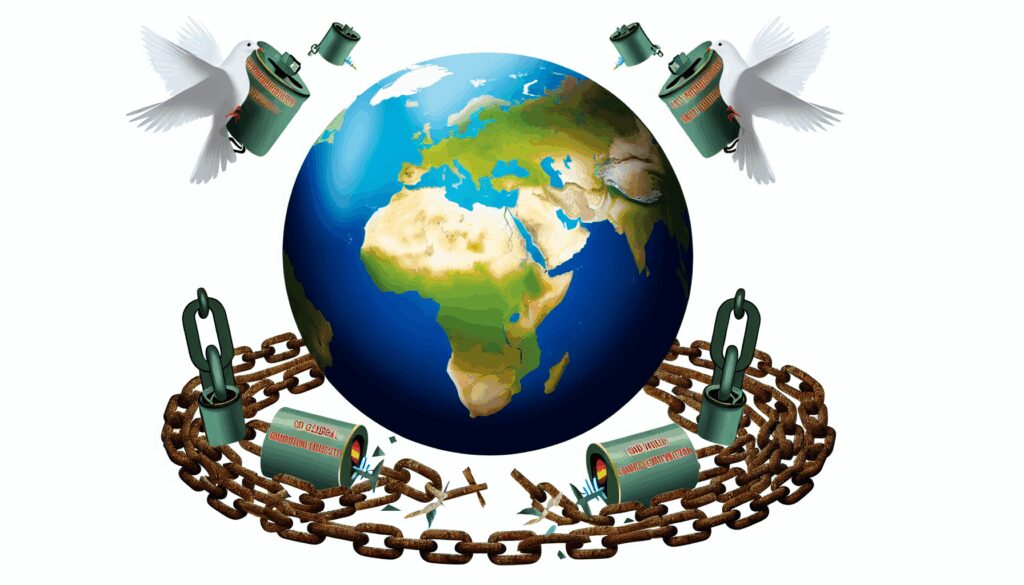
The Anti-Personnel Mine Ban Convention (APMBC), or Ottawa Treaty, adopted in 1997, has significantly reduced landmine use and casualties globally while promoting humanitarian and socio-economic progress through mine clearance and victim assistance. Despite its impact, challenges remain with non-signatory states and recent withdrawals threatening its effectiveness.
Combating Global Bribery: The Impact of the United Nations Convention against Corruption on International Business Practices

Corruption, especially bribery, threatens international business integrity by undermining fair competition and trust. The United Nations Convention Against Corruption (UNCAC), adopted in 2003, is the first global treaty to combat corruption in public and private sectors. This article explores UNCAC’s impact on business practices and legal frameworks.
Combating Global Racism: The Impact of the International Convention on the Elimination of All Forms of Racial Discrimination

This article explores the International Convention on the Elimination of All Forms of Racial Discrimination (ICERD), a key UN human rights instrument from 1965. It examines ICERD’s legal framework, provisions, state implementation, and global impact on combating racism, while addressing treaty-making processes, challenges, and ongoing relevance.

