

Combating Global Threats: The Role of the International Convention for the Suppression of the Financing of Terrorism in Preventing Terrorist Funding

This article explores the International Convention for the Suppression of the Financing of Terrorism (ICSFT), adopted in 1999, as a critical tool in disrupting terrorist funding. It examines the treaty’s provisions, legal mechanisms for accession, monist and dualist implementation approaches, and its alignment with the Vienna Convention on the Law of Treaties.
Fiji’s Treaty-Making Process: Navigating Constitutional Frameworks and International Commitments

This article analyzes Fiji’s treaty-making process under the 2013 Constitution, detailing the roles of the executive, Parliament, and judiciary. It highlights Fiji’s dualist approach to integrating international treaties into domestic law, the challenges of implementation, and implications of not being a party to the Vienna Convention on the Law of Treaties 1969.
Paris Agreement: Assessing the Global Commitment to Carbon Emission Reductions

The Paris Agreement, adopted in 2015, is a landmark treaty under the UNFCCC, uniting 196 parties to combat climate change by limiting global warming to below 2°C, ideally 1.5°C. It introduces Nationally Determined Contributions (NDCs) for tailored emission reductions, though challenges remain in achieving sufficient global impact.
Finland’s Treaty-Making Process: Constitutional Foundations and International Commitments

This article explores Finland’s treaty-making process, highlighting its constitutional basis, dualist approach with monist elements for human rights and EU law, and adherence to the Vienna Convention on the Law of Treaties (1969). It underscores Finland’s balance of national sovereignty and international obligations.
Combating Oceanic Exploitation: How the Port State Measures Agreement Targets Illegal Fishing
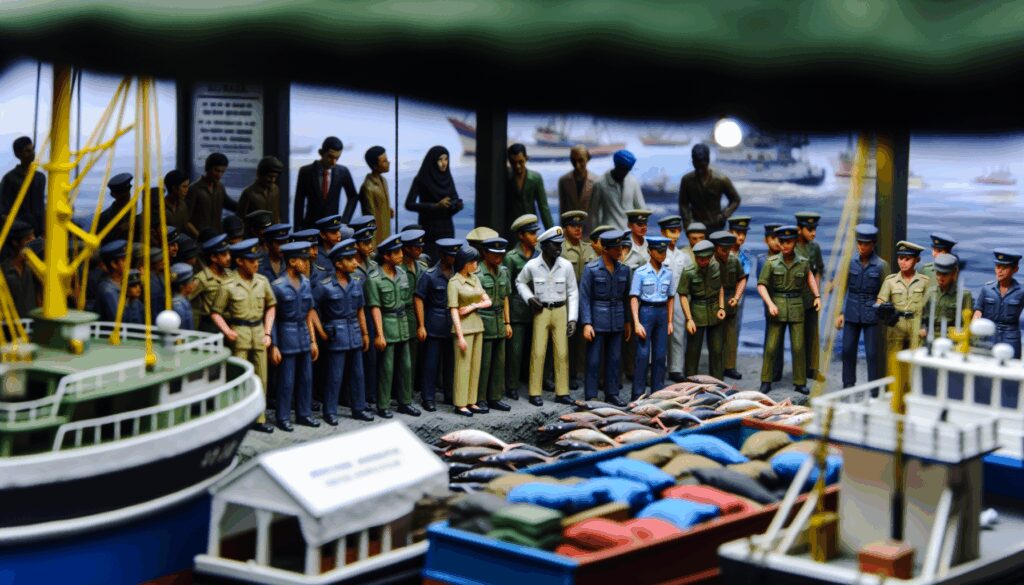
The Agreement on Port State Measures (PSMA), adopted in 2009 under the FAO, is a pivotal international treaty combating Illegal, Unreported, and Unregulated (IUU) fishing. It empowers port states to deny access to vessels engaged in IUU activities, disrupting their operations and protecting marine ecosystems.
Navigating International Agreements: How Equatorial Guinea Enters Treaties Under Its Constitution and Existing Conventions

This article explores Equatorial Guinea’s treaty-making process under its Constitution, highlighting the President’s central role and parliamentary oversight for significant agreements. It examines the country’s dualist approach to international law, non-party status to the Vienna Convention, and implications for international cooperation.
Addressing Child Labor: Challenges in Implementing the Convention on the Rights of the Child

Child labor remains a global crisis, affecting millions and violating children’s rights, despite the United Nations Convention on the Rights of the Child (CRC). This article examines the challenges of implementing the CRC through monist and dualist legal systems, cultural norms, and economic constraints, using a hypothetical country as a case study.
Eritrea’s Treaty-Making Process: Constitutional Framework and International Commitments
This article examines Eritrea’s treaty-making process within its constitutional framework, highlighting the roles of the President and National Assembly in negotiating and ratifying agreements. It explores Eritrea’s dualist approach to integrating treaties into national law and its non-party status to the Vienna Convention on the Law of Treaties 1969.
The Paris Agreement: Challenges in Meeting Global Climate Targets

Climate change poses a critical global challenge, addressed by the Paris Agreement of 2015, which aims to limit temperature rises to below 2°C. Despite near-universal adoption, the Agreement struggles with non-binding commitments, implementation gaps, political instability, and economic trade-offs, hindering its ambitious climate goals.
Estonia’s Treaty-Making Process: Balancing Constitutional Framework and International Commitments
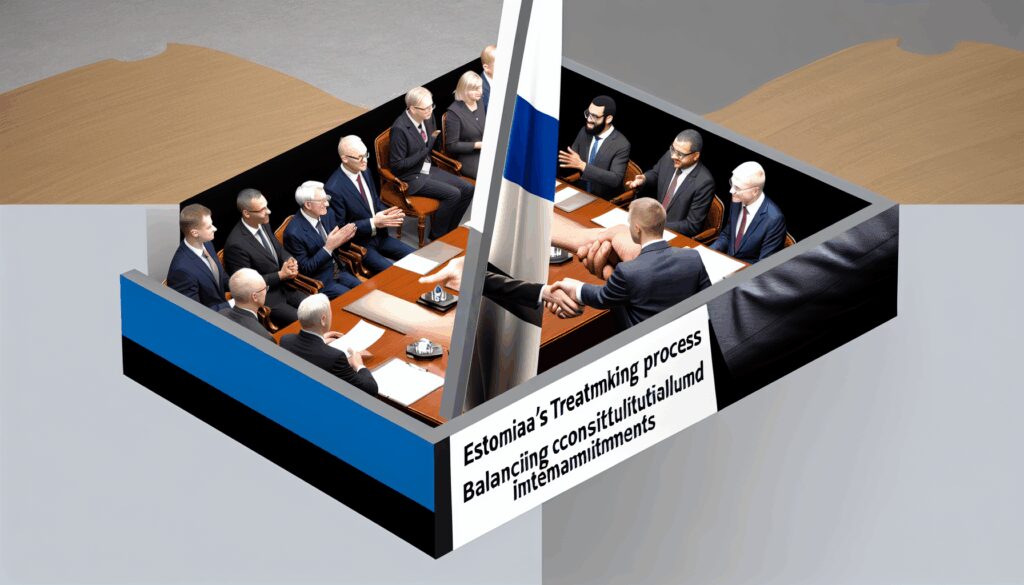
This article examines Estonia’s treaty-making process within its constitutional framework, focusing on Articles 65, 121, and 123 of the Estonian Constitution. It analyzes Estonia’s hybrid monist-dualist approach to incorporating treaties into national law and its adherence to the Vienna Convention on the Law of Treaties (1969).

