

Navigating International Agreements: How the Pitcairn Islands Enter Treaties Under Their Constitution and Existing Conventions

The Pitcairn Islands, a remote British Overseas Territory with fewer than 50 residents, navigate international agreements through their constitutional ties with the UK. Lacking independent treaty-making powers, Pitcairn relies on the UK for treaty extensions, operates under a dualist legal framework, and adheres to the Vienna Convention via UK ratification.
Protecting Wanderers: The Role of the Bonn Convention in Safeguarding Migratory Species

This article examines the Bonn Convention, a key international treaty adopted in 1979 to conserve migratory species across global ecosystems. It explores the Convention’s legal framework, membership of 133 states, mechanisms for treaty accession, monist and dualist implementation approaches, and challenges like habitat loss and climate change.
Unseen and Unheard: Tackling the Global Crisis of Enforced Disappearances under the International Convention
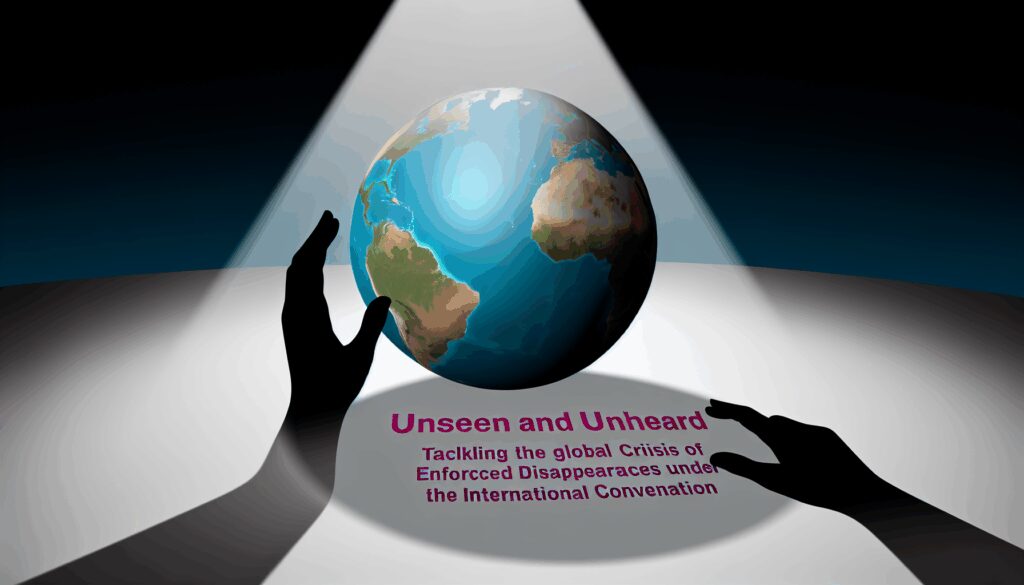
This article examines the global crisis of enforced disappearances, a severe human rights violation, and the role of the International Convention for the Protection of All Persons from Enforced Disappearance (ICPPED) in addressing it. It explores legal frameworks, state engagement with treaties, and challenges in implementation.
Enhancing Maritime Security: The Impact of the International Convention for the Safety of Life at Sea (SOLAS), 1974

This article explores the impact of the International Convention for the Safety of Life at Sea (SOLAS) 1974 on maritime security, highlighting its key provisions, amendments, and implementation challenges. It also examines treaty adoption in a hypothetical “Country X,” analyzing its legal framework, monist or dualist approach, and international cooperation.
Exploring Accountability in Orbit: Unpacking the Convention on International Liability for Damage Caused by Space Objects

This article explores the Convention on International Liability for Damage Caused by Space Objects (1972), detailing its dual liability regime for damages caused by space activities. It examines treaty entry processes, monist and dualist legal approaches, national implementation, and its relationship with the Vienna Convention on the Law of Treaties.
Addressing the Global Threat: Challenges in Enforcing the Anti-Personnel Mine Ban Treaty

This article examines the Anti-Personnel Mine Ban Treaty (APMBT), highlighting its aim to eliminate anti-personnel mines and the challenges in enforcement, such as non-ratification by major powers, resource constraints, and weak monitoring. It also explores treaty adoption in the hypothetical country of Erewhon, illustrating broader compliance issues in international law.
Tuvalu’s Treaty-Making Process: Navigating Constitutional Frameworks and International Commitments

Tuvalu, a small Pacific Island nation, navigates unique challenges in treaty-making due to climate change, limited resources, and its constitutional framework. This article explores Tuvalu’s executive-driven treaty process, its dualist approach to integrating international agreements into national law, and its adherence to customary international law despite not joining the Vienna Convention.
Nauru’s Treaty-Making Process: Constitutional Foundations and International Commitments

This article explores Nauru’s treaty-making process, highlighting its constitutional framework, dualist approach to international law, and non-party status to the Vienna Convention on the Law of Treaties 1969. It examines executive-driven treaty negotiations, domestic implementation challenges, and implications for international partners engaging with this small Pacific nation.
Kosovo’s Treaty-Making Process: Constitutional Framework and International Obligations

This article examines Kosovo’s treaty-making process since its 2008 independence, focusing on constitutional provisions, integration of international law, and its ambiguous status with the Vienna Convention on the Law of Treaties (1969). It highlights Kosovo’s hybrid legal approach and implications for international relations with emerging states.
Greenland’s Treaty-Making Process: Constitutional Framework and International Commitments

This article examines Greenland’s treaty-making process within its autonomous framework under the Kingdom of Denmark. It explores Greenland’s constitutional authority, dualist approach to integrating treaties into domestic law, and adherence to the Vienna Convention on the Law of Treaties through Denmark, highlighting implications for international engagement.

